The Prohibition of Eating and Drinking in Fish Processing Areas
By. Wildan - 05 Aug 2026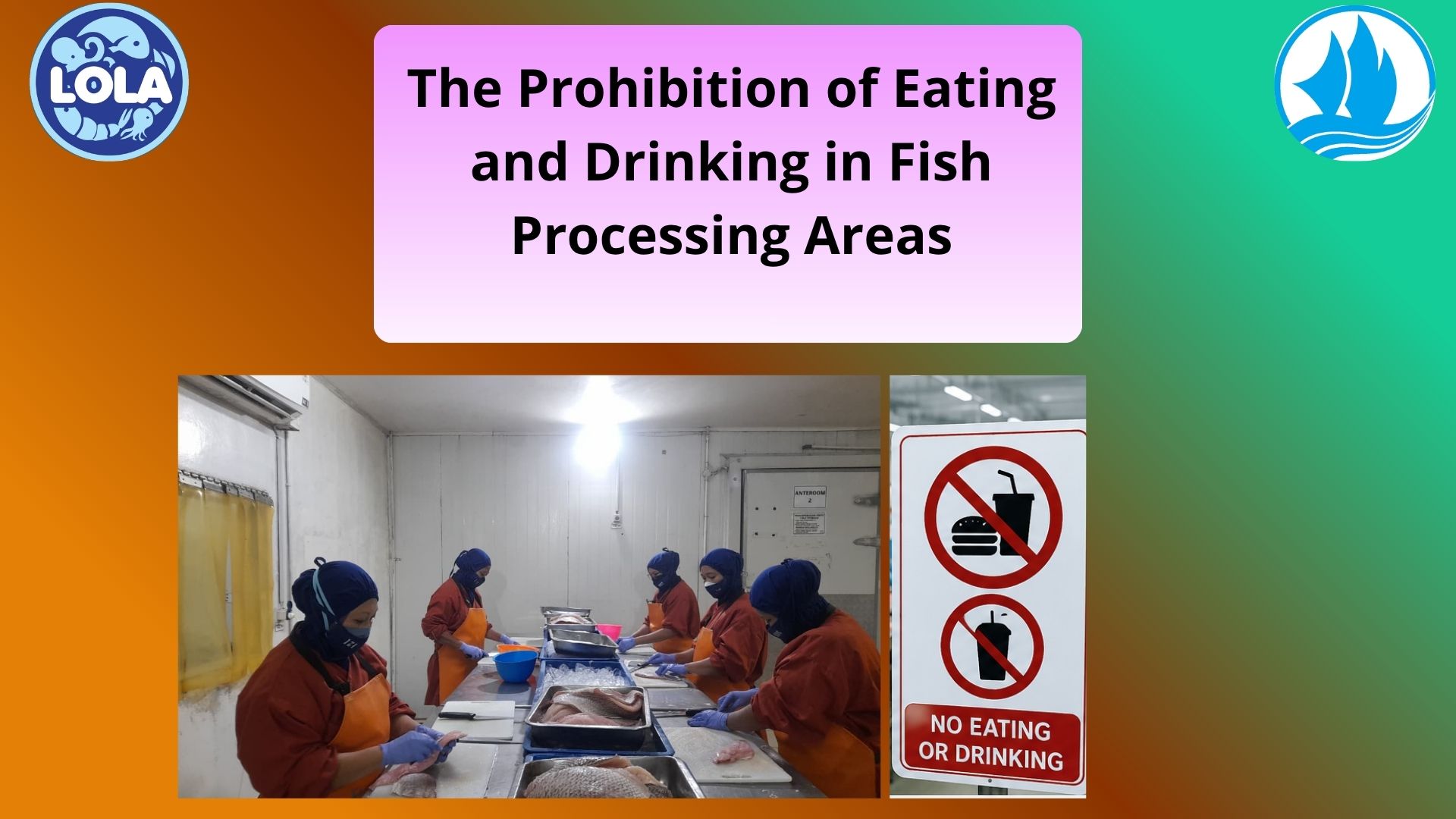
kelolalaut.com Food safety and hygienic integrity form the bedrock of the global seafood processing industry. Fish and shellfish are highly perishable, nutrient-rich commodities that are particularly susceptible to rapid biological contamination, chemical cross-contamination, and foreign matter hazards. To uphold strict Hazard Analysis Critical Control Point (HACCP) standards, Good Manufacturing Practices (GMPs), and international regulatory requirements, processing facilities strictly enforce The Prohibition of Eating and Drinking in Fish Processing Areas.
While workplace snacking or drinking personal beverages may seem like harmless habits, allowing food and drink on the production floor introduces grave food safety risks, endangers consumer health, and jeopardizes a plant’s regulatory compliance.
1. Preventing Foreign Physical and Chemical Contamination
The physical presence of unapproved food items, drink containers, and packaging materials inside a chilled processing hall presents an immediate risk of foreign object contamination.
- Packaging Debris: Plastic wrappers, aluminum foil, bottle caps, and paper straws brought into processing halls can easily drop into open fish flumes, grinding machinery, or packaging trays undetected.
- Chemical Spills: Sugary soft drinks, coffee, or flavored juices spilled onto food-contact equipment, conveyor belts, or stainless steel filleting tables create chemical residues that alter product quality and corrode machinery surfaces.
[Personal Food & Drink Brought to Floor]
│
▼
[Risk of Drops, Spills, & Wrappers in Processing Line]
│
▼
[Physical Contamination / Chemical Residue in Fish Product]
│
▼
[Batch Contamination, Product Recall, & Regulatory Sanctions]
│
▼
[Zero Tolerance]
2. Eliminating Biological and Pathogenic Cross-Contamination
Human hands, mouth contact, and personal foods act as primary vectors for introducing dangerous pathogens into a clean processing environment.
- Saliva and Oral Pathogens: Eating and drinking require workers to remove face masks and touch their lips or mouths. This action transfers salivary bacteria—such as Staphylococcus aureus—from the human body directly onto hands or gloves, which then touch raw fish fillets.
- Allergen Cross-Contact: Personal snacks often contain major allergens such as peanuts, tree nuts, dairy, soy, or gluten. Introducing unmonitored allergens into a dedicated fish processing facility creates severe cross-contact hazards for consumers with life-threatening food allergies.
- Vector Attraction: Food crumbs, fruit peels, and beverage spills left on processing equipment or floor drains serve as potent attractants for pests, including rodents, flies, and cockroaches, which carry harmful bacteria like Salmonella and E. coli.
3. Mitigating Biofilm Formation and Microbial Growth
Fish processing plants operate under high moisture and low ambient temperatures (typically 10°C to 12°C) to suppress bacterial proliferation. However, organic residues from human snacks—such as carbohydrates, sugars, and fats—provide an ideal nutrient source for microbial growth.
|
Risk Factor |
Source from Personal Snacks |
Impact on Fish Processing Floor |
|
Nutrient Spills |
Sugary drinks, fruit juice |
Accelerates rapid growth of Pseudomonas and mold |
|
Organic Solids |
Bread crumbs, biscuit fragments |
Traps moisture in equipment crevices, forming resilient biofilms |
|
Glove Degradation |
Oils and greases from fried snacks |
Compromises glove integrity, exposing bare hands to fish tissue |
When sugary or greasy food particles lodge in conveyor hinges, drain grates, or cutting board grooves, they facilitate the formation of stubborn bacterial biofilms—such as Listeria monocytogenes—that resist routine chemical sanitization.
4. Regulatory Compliance and Enforcement Protocols
Global food safety standards—including the U.S. FDA’s Current Good Manufacturing Practice (cGMP) regulations, European Union hygiene rules (EC No 852/2004), and Global Food Safety Initiative (GFSI) benchmarks—explicitly forbid eating, drinking, chewing gum, or using tobacco in food handling zones.
- Designated Break Areas: Facilities must provide clean, comfortable lunchrooms or break areas outside the hygiene perimeter where staff can eat, hydrate, and store personal meals safely.
- Hydration Protocol Compliance: When hydration is necessary during long operational shifts, facilities must install dedicated hydration stations equipped with hands-free, touchless water dispensers located outside active processing zones.
- Strict Training and Auditing: Plant managers and Quality Assurance (QA) personnel must enforce a zero-tolerance policy through daily visual audits, signage, and mandatory employee orientation programs.
Implementing and enforcing a strict policy against eating and drinking inside fish processing rooms is non-negotiable. By maintaining a clean production floor free from personal food and beverages, seafood processors effectively eliminate cross-contamination hazards, safeguard consumer welfare, and ensure total compliance with international food safety standards.
If youre interested in our Baby Octopus Flower, Baby Octopus Whole Cleaned, Baby Octopus Whole Round, Barramundi Fillet Portion Cut, Barramundi Fillet Skin On, Barramundi Fillet Skin On. Barramundi Fillet Skinless, Barramundi Whole Round / Whole Gilled Gutted Scaled,Black Pomfret Portion Cut, Bonito Fillet Loin,Bonito Fillet Portion Cut,Bonito Whole Round,Catfish Fillet Skinless,Catfish Steak,Catfish Whole Round / Whole Gilled Gutted,Cobia Fillet Skin On,Cobia Fillet Skinless,Cobia Whole Round / Whole Gilled Gutted,Coral Trout Fillet Skinless,Coral Trout Fillet Skinless,Coral Trout Whole Round,Corvina / Croaker / Jew Fish Whole Round / Whole Gilled Gutted Scaled,Corvina / Croaker / Jewfish Fillet Skin On,Corvina Fillet Skin Patch,Whiting Fish Whole Round,Parrotfish Fillet Skinless,Red / Scarlet Snapper Fillet Portion,Red / Scarlet Snapper Fillet Skin On,Red / Scarlet Snapper Indonesian Seaperch Whole Round / Whole Gilled Gutted Scaled,Red / Scarlet Snapper Saddle Tailed Seaperch Whole Round / Whole Gilled Gutted Scaled,Shark Belly,Shark Cartilage,Shark Fillet,Shark Flake,Snapper / Red Bass Whole Round / Whole Gilled Gutted Scaled,Snapper Fillet Skinless,Snapper Mangrove Jack Whole Round / Whole Gilled Gutted Scaled,Spanish Mackerel Cutlet / Kingfish Steak,Squid Flower Cut,Squid Ring, Squid Skewer,Squid Tube,Squid Whole Cleaned,Squid Whole Round,Sweetlips Fillet Skin On,Sweetlips Fillet Skinless,Sweetlips Whole Round / Whole Gilled Gutted Scaled,White Snapper / Robinson Sea Bream Fillet Skin On,White Snapper / Robinson Seabream / Seabream Whole Round / Whole Gilled Gutted Scaled,Cuttlefish Fillet.Cuttlefish Pineapple Cut,Cuttlefish Whole Cleaned,Cuttlefish Whole Round,Emperor Fillet Skin On,Emperor Fillet Skinless,Emperor Grass Whole Round / Whole Gilled Gutted Scaled,Emperor Red Spot Whole Round / Whole Gilled Gutted Scaled,Emperor Whole Round / Whole Gilled Gutted Scaled,Giant Trevalley Fillet Skin On,Giant Trevalley Whole Round,Goldband / Crimson Snapper Fillet Portion Cut,Goldband / Crimson Snapper Fillet Skin On,Goldband / Crimson Snapper Whole Round / Whole Gilled Gutted Scaled,Grouper Black Dotted Whole Round,Grouper Fillet Portion Cut,Grouper Fillet Skinless,Gummy Shark Fillet,Halibut Fillet Skinless.Indian Mackerel Whole Round / Whole Gilled Gutted,Itoyori / Golden Threadfin Fillet Butterfly,Mahi-Mahi Fillet Skinless,Octopus Leg,Parrotfish Fillet Skin On please do not hesitate to contact us through email and/or Whatsappp