The Essential Steps for Daily Deep-Cleaning in Fish Processing Areas
By. Ely Kusniawati - 03 Aug 2026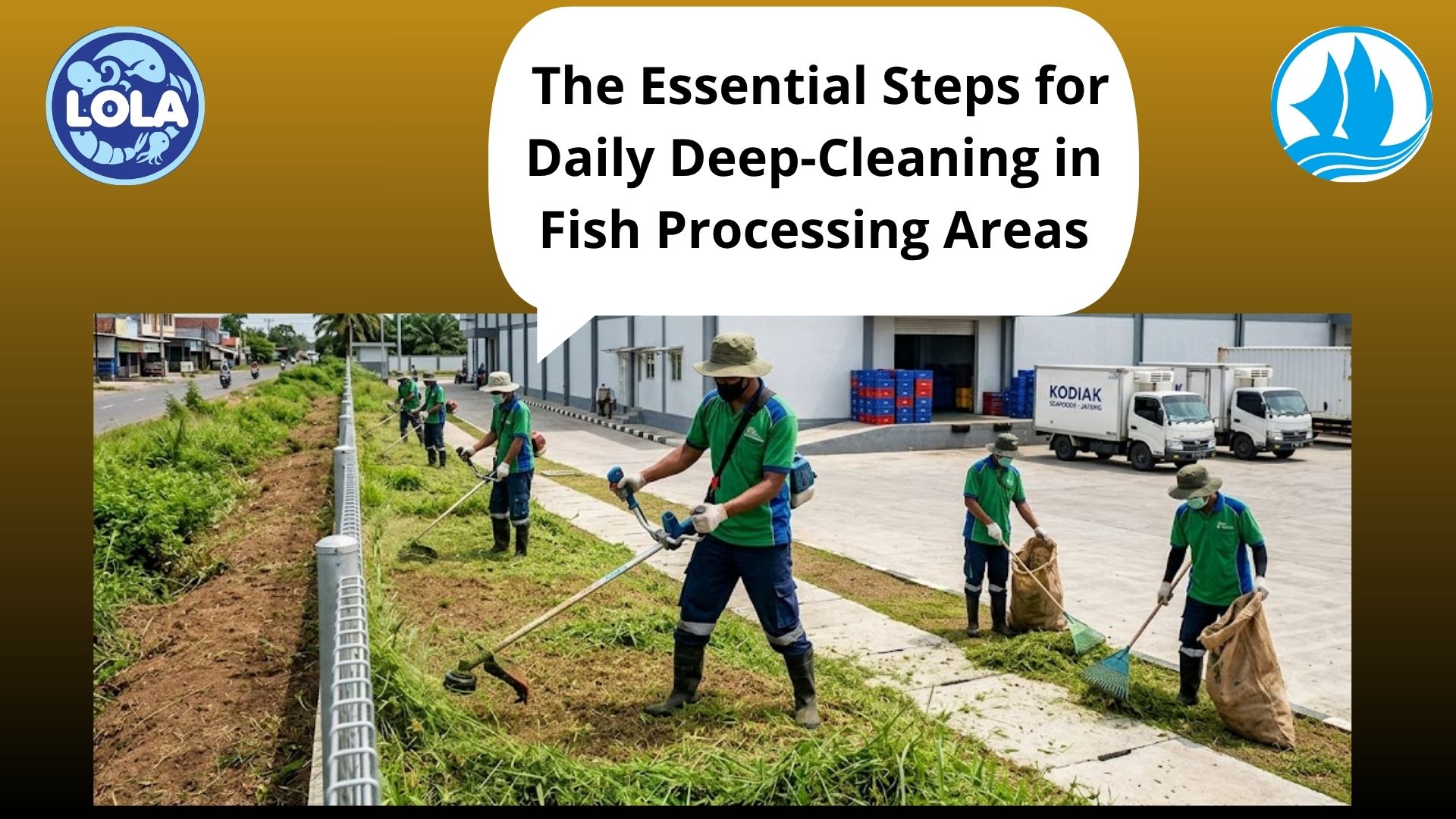
kelolalaut.com Maintaining absolute hygiene in fish processing facilities is a critical defense against biological contamination, foodborne pathogens, and severe product spoilage. Fish tissue is naturally delicate, high in moisture, and rich in free amino acids, making it an ideal breeding ground for spoilage bacteria such as Pseudomonas and high-risk pathogens like Listeria monocytogenes and Salmonella. Furthermore, the processing of fish generates heavy organic soils—including proteins, fats, scales, and blood—that rapidly form tough biofilms on equipment surfaces if not thoroughly removed daily.
To ensure compliance with Hazard Analysis Critical Control Point (HACCP) standards and pass regulatory inspections, processing plants must execute a rigorous, standardized daily deep-cleaning protocol at the end of every operational shift.
1. Dry Cleaning and Mechanical Removal
Before applying water or chemical agents, the facility must undergo a thorough dry cleaning phase to remove large organic solids.
- Scraping and Sweeping: Workers use food-grade squeegees, scrapers, and brushes to collect fish offal, scales, bones, and trimmings from processing tables, conveyor belts, and floor gutters.
- Waste Disposal: Organic waste must be transferred immediately into color-coded, covered waste receptacles and removed from the primary processing hall. Eliminating bulk organic solids prevents drain blockages and reduces chemical waste during subsequent washing stages.
2. Pre-Rinsing with Low-Pressure Chilled or Warm Water
Once solid waste is cleared, surfaces are pre-rinsed to remove remaining loose soils, blood, and soluble proteins.
[Dry Scraping] ──> [Pre-Rinse: 40°C–50°C] ──> [Foam Detergent] ──> [Final Sanitize]
- Temperature Regulation: Water temperature during pre-rinsing should strictly stay between 40°C and 50°C (104°F to 122°F). Using water above 60°C (140°F) will cause fish proteins to coagulate ("bake") onto stainless steel surfaces, creating a stubborn residue that is extremely difficult to remove.
- Pressure Control: High-pressure water sprays should be strictly avoided during pre-rinsing. High-pressure jets create aerosols that scatter bacteria into the air, allowing pathogens to settle on previously cleaned ceiling beams or adjacent machinery. Low-pressure, high-volume hoses are the industry standard.
3. Detergent Application and Active Scrubbing
Water alone cannot break down insoluble fish fats, oils, and protein films. A targeted chemical detergent phase is essential.
- Alkaline Foam Detergents: High-foaming, heavy-duty alkaline cleaners (pH 11–12) containing chlorinated additives are applied to all contact and non-contact surfaces. The foam clings to vertical surfaces, extending dwell time (typically 15–20 minutes) to break down complex lipid and protein chains.
- Manual Scrubbing: Automated foam application must be paired with mechanical action. Cleaners use color-coded, non-abrasive scrub pads and brushes to break up stubborn grime on conveyor hinges, filleting blades, and cutting boards.
4. Post-Rinse Inspection and Verification
After detergent contact time concludes, all surfaces must be thoroughly rinsed with clean, potable water.
- Complete Chemical Removal: Hosing starts from the top of equipment and moves downward toward the floor drains, ensuring zero detergent residue remains on food-contact zones.
- Visual Verification: A designated sanitation manager conducts a visual inspection using high-intensity waterproof flashlights to check for lingering scales, fat sheens, or detergent suds in hard-to-reach crevices.
5. Chemical Sanitization
Rinsing removes dirt, but sanitizing destroys microscopic pathogens that survive the washing process.
|
Sanitizer Type |
Recommended Concentration |
Key Advantage in Seafood Plants |
|
Quaternary Ammonium Compounds (Quats) |
200–400 ppm |
Leaves a lingering protective film on non-contact surfaces and floors. |
|
Peracetic Acid (PAA) |
100–200 ppm |
Highly effective against Listeria biofilms at cold temperatures; no-rinse safe. |
|
Chlorine Dioxide (ClO2) |
1–5 ppm |
Fast-acting, broad-spectrum antimicrobial that effectively neutralizes fish odors. |
Sanitizers are sprayed evenly across all food-contact equipment and allowed to air-dry. No-rinse sanitizers must strictly comply with regional food safety concentration limits.
6. Environmental Drying and Quality Control
Excess moisture is the primary catalyst for bacterial regrowth during non-operational hours.
- Drying the Envelope: Facility air handling units (AHUs) should be switched to a dehumidification mode to pull ambient moisture out of the air, preventing condensation on ceilings and walls.
- ATP Bioluminescence Testing: Prior to restarting production the following morning, quality assurance teams perform swab tests using Adenosine Triphosphate (ATP) meters. ATP swabs provide instant quantitative feedback, confirming whether surfaces are biologically clean or require re-cleaning.
Executing these six essential steps daily guarantees that a fish processing facility remains free of pathogen reservoirs, protects consumer safety, preserves product shelf life, and maintains peak operational readiness.
If youre interested in our Baby Octopus Flower, Baby Octopus Whole Cleaned, Baby Octopus Whole Round, Barramundi Fillet Portion Cut, Barramundi Fillet Skin On, Barramundi Fillet Skin On. Barramundi Fillet Skinless, Barramundi Whole Round / Whole Gilled Gutted Scaled,Black Pomfret Portion Cut, Bonito Fillet Loin,Bonito Fillet Portion Cut,Bonito Whole Round,Catfish Fillet Skinless,Catfish Steak,Catfish Whole Round / Whole Gilled Gutted,Cobia Fillet Skin On,Cobia Fillet Skinless,Cobia Whole Round / Whole Gilled Gutted,Coral Trout Fillet Skinless,Coral Trout Fillet Skinless,Coral Trout Whole Round,Corvina / Croaker / Jew Fish Whole Round / Whole Gilled Gutted Scaled,Corvina / Croaker / Jewfish Fillet Skin On,Corvina Fillet Skin Patch,Whiting Fish Whole Round,Parrotfish Fillet Skinless,Red / Scarlet Snapper Fillet Portion,Red / Scarlet Snapper Fillet Skin On,Red / Scarlet Snapper Indonesian Seaperch Whole Round / Whole Gilled Gutted Scaled,Red / Scarlet Snapper Saddle Tailed Seaperch Whole Round / Whole Gilled Gutted Scaled,Shark Belly,Shark Cartilage,Shark Fillet,Shark Flake,Snapper / Red Bass Whole Round / Whole Gilled Gutted Scaled,Snapper Fillet Skinless,Snapper Mangrove Jack Whole Round / Whole Gilled Gutted Scaled,Spanish Mackerel Cutlet / Kingfish Steak,Squid Flower Cut,Squid Ring, Squid Skewer,Squid Tube,Squid Whole Cleaned,Squid Whole Round,Sweetlips Fillet Skin On,Sweetlips Fillet Skinless,Sweetlips Whole Round / Whole Gilled Gutted Scaled,White Snapper / Robinson Sea Bream Fillet Skin On,White Snapper / Robinson Seabream / Seabream Whole Round / Whole Gilled Gutted Scaled,Cuttlefish Fillet.Cuttlefish Pineapple Cut,Cuttlefish Whole Cleaned,Cuttlefish Whole Round,Emperor Fillet Skin On,Emperor Fillet Skinless,Emperor Grass Whole Round / Whole Gilled Gutted Scaled,Emperor Red Spot Whole Round / Whole Gilled Gutted Scaled,Emperor Whole Round / Whole Gilled Gutted Scaled,Giant Trevalley Fillet Skin On,Giant Trevalley Whole Round,Goldband / Crimson Snapper Fillet Portion Cut,Goldband / Crimson Snapper Fillet Skin On,Goldband / Crimson Snapper Whole Round / Whole Gilled Gutted Scaled,Grouper Black Dotted Whole Round,Grouper Fillet Portion Cut,Grouper Fillet Skinless,Gummy Shark Fillet,Halibut Fillet Skinless.Indian Mackerel Whole Round / Whole Gilled Gutted,Itoyori / Golden Threadfin Fillet Butterfly,Mahi-Mahi Fillet Skinless,Octopus Leg,Parrotfish Fillet Skin On please do not hesitate to contact us through email and/or Whatsappp