How Water Treatment and Quality Assurance Standards for Seafood Manufacturing
By. Wildan - 31 Jul 2026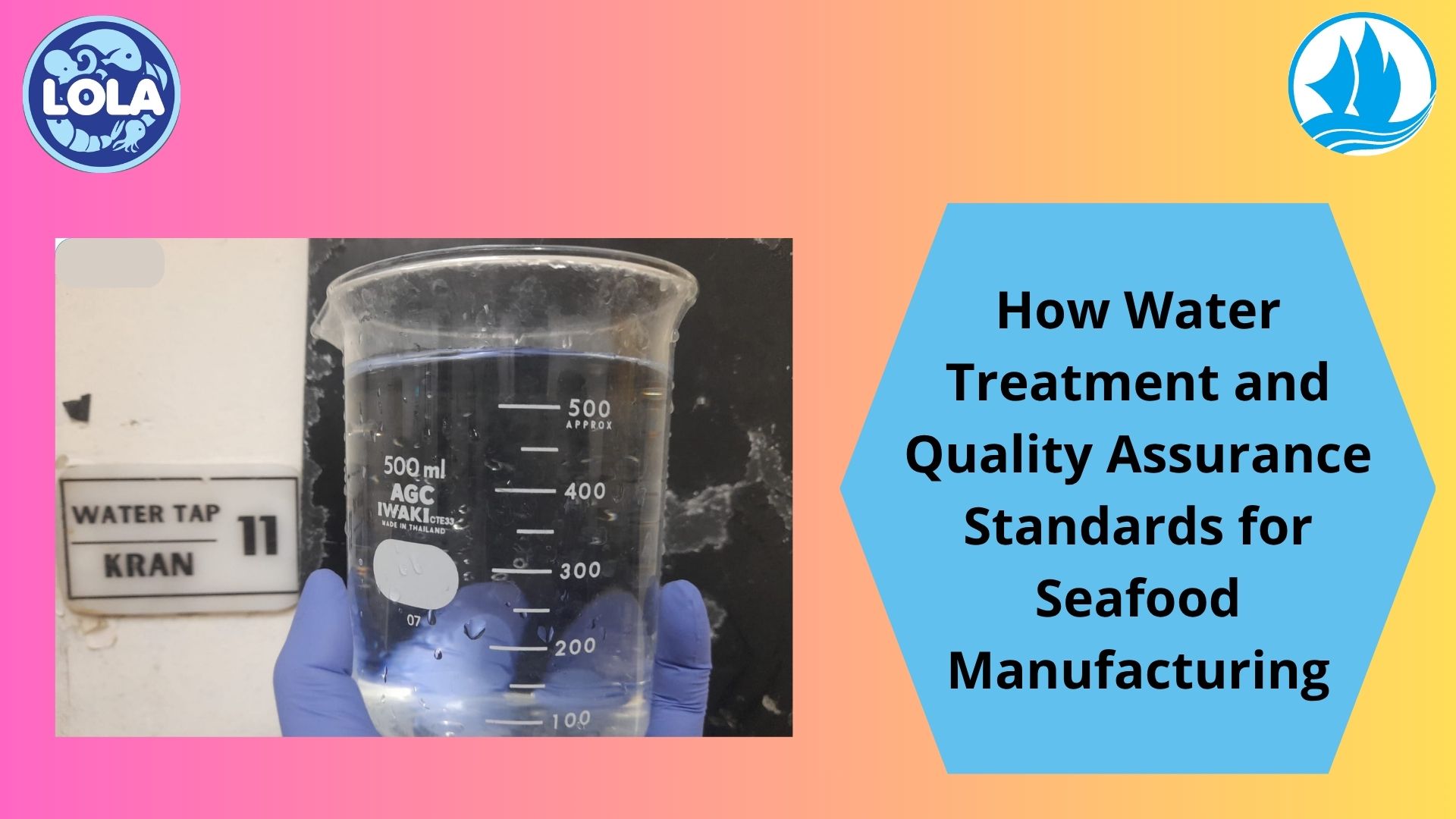
kelolalaut.com Water is the lifeblood of the seafood processing industry. From the moment fish are landed on processing decks to the final stages of washing, filleting, glazing, and packaging, water touches the product at virtually every operational milestone. Because fish tissues naturally harbor microorganisms and rapidly degrade under improper conditions, the purity and safety of water used throughout manufacturing are directly linked to final product safety, shelf life, and brand integrity.
Establishing rigorous water treatment and quality assurance (QA) standards is therefore a fundamental operational requirement for modern seafood processors globally.
1. Primary Functions of Water in Seafood Processing
Understanding water usage across different manufacturing zones helps identify critical control points (CCPs) for quality management:
- Primary Washing and De-icing: Initial rinsing removes sea salt, slime, debris, and surface bacteria immediately post-harvest.
- Filleting and Evisceration: Water lubricates cutting machinery, flushes away offal, and prevents cross-contamination between carcasses.
- Glazing: Applying a thin protective ice coat onto frozen seafood prevents freezer burn and lipid oxidation during long-term storage.
- Sanitation (CIP & COP): Clean-In-Place and Clean-Out-of-Place procedures rely on hot water and chemical sanitizers to sanitize processing lines, conveyor belts, and holding tanks.
[ Raw Seafood Intake ] ──► [ Wash & De-icing ] ──► [ Processing & Filleting ] ──► [ Glazing / Freezing ] ──► [ Packaging ]
2. Regulatory Baselines and Microbial Standards
Seafood processing facilities must comply with strict international regulatory frameworks, such as those set by the U.S. Food and Drug Administration (FDA), the European Food Safety Authority (EFSA), and local environmental health authorities.
- Potability Requirement: All water coming into direct or indirect contact with seafood must meet national and international standards for drinking water (potable water).
- Zero Microbial Tolerance: Water must be entirely free from pathogenic microorganisms, including Escherichia coli, Salmonella spp., Vibrio cholerae, and Listeria monocytogenes.
- Seawater vs. Fresh Water: If clean seawater is utilized onboard vessels or coastal plants, it must meet identical microbial safety standards as terrestrial drinking water through specialized filtration and chemical or physical treatment.
3. Core Water Treatment Technologies in Seafood Facilities
Raw water sourced from municipal lines, deep wells, or open ocean intakes rarely meets seafood-grade processing standards without multi-stage treatment. Processors deploy a layered filtration and disinfection approach:
|
Treatment Method |
Mechanism |
Primary Application |
|
Media & Microfiltration |
Removes suspended solids, sand, and particulate organic matter. |
Pre-treatment for raw water intake. |
|
Reverse Osmosis (RO) |
Removes dissolved minerals, salts, and micro-contaminants. |
Desalination and water softening for boiler/glazing lines. |
|
Ozonation ($O_3$) |
Powerful oxidizer; destroys bacteria and viruses rapidly without chemical residues. |
Secondary wash water and surface sanitization. |
|
Ultraviolet (UV) Disinfection |
Disrupts microbial DNA, rendering pathogens inert without changing water taste/odor. |
Final polishing step prior to direct product contact. |
|
Chlorination / Chlorine Dioxide |
Maintains residual disinfection throughout distribution piping. |
General plant washdown and equipment sanitation. |
4. Quality Assurance (QA) and Continuous Monitoring
Implementing advanced water treatment equipment is only half the battle; maintaining continuous quality assurance guarantees that systems perform as intended.
Automated Monitoring and Testing Protocols
Modern plants integrate real-time sensors along key distribution loops to measure essential chemical and physical parameters:
- Free Residual Chlorine: Kept within safe target limits ($0.2\text{ to }0.5\text{ mg/L}$ for contact wash, higher for sanitation) to ensure disinfection without creating off-flavors or chemical residues.
- pH and Oxidation-Reduction Potential (ORP): Monitored to maintain optimal disinfectant efficacy.
- Turbidity: Ensures water clarity and prevents organic matter from shielding microbes from UV light or ozone exposure.
Routine Microbiological Sampling: QA technicians must collect weekly or daily water samples across multiple outlet taps to perform heterotrophic plate counts (HPC) and coliform testing, catching potential biofilm accumulation within internal piping.
5. Sustainability and Wastewater Management
Water quality assurance extends beyond intake and processing to environmental discharge. Fish processing generates large volumes of high-strength organic wastewater containing proteins, lipids, and suspended solids.
Processing plants implement Dissolved Air Flotation (DAF) systems, biological reactors, and advanced membrane bioreactors (MBR) to treat effluent before discharge. Reclaiming and treating wash water for non-product contact applications—such as cooling towers or exterior yard washing—allows manufacturers to reduce overall water consumption and align with environmental, social, and governance (ESG) commitments
If youre interested in our Baby Octopus Flower, Baby Octopus Whole Cleaned, Baby Octopus Whole Round, Barramundi Fillet Portion Cut, Barramundi Fillet Skin On, Barramundi Fillet Skin On. Barramundi Fillet Skinless, Barramundi Whole Round / Whole Gilled Gutted Scaled,Black Pomfret Portion Cut, Bonito Fillet Loin,Bonito Fillet Portion Cut,Bonito Whole Round,Catfish Fillet Skinless,Catfish Steak,Catfish Whole Round / Whole Gilled Gutted,Cobia Fillet Skin On,Cobia Fillet Skinless,Cobia Whole Round / Whole Gilled Gutted,Coral Trout Fillet Skinless,Coral Trout Fillet Skinless,Coral Trout Whole Round,Corvina / Croaker / Jew Fish Whole Round / Whole Gilled Gutted Scaled,Corvina / Croaker / Jewfish Fillet Skin On,Corvina Fillet Skin Patch,Whiting Fish Whole Round,Parrotfish Fillet Skinless,Red / Scarlet Snapper Fillet Portion,Red / Scarlet Snapper Fillet Skin On,Red / Scarlet Snapper Indonesian Seaperch Whole Round / Whole Gilled Gutted Scaled,Red / Scarlet Snapper Saddle Tailed Seaperch Whole Round / Whole Gilled Gutted Scaled,Shark Belly,Shark Cartilage,Shark Fillet,Shark Flake,Snapper / Red Bass Whole Round / Whole Gilled Gutted Scaled,Snapper Fillet Skinless,Snapper Mangrove Jack Whole Round / Whole Gilled Gutted Scaled,Spanish Mackerel Cutlet / Kingfish Steak,Squid Flower Cut,Squid Ring, Squid Skewer,Squid Tube,Squid Whole Cleaned,Squid Whole Round,Sweetlips Fillet Skin On,Sweetlips Fillet Skinless,Sweetlips Whole Round / Whole Gilled Gutted Scaled,White Snapper / Robinson Sea Bream Fillet Skin On,White Snapper / Robinson Seabream / Seabream Whole Round / Whole Gilled Gutted Scaled,Cuttlefish Fillet.Cuttlefish Pineapple Cut,Cuttlefish Whole Cleaned,Cuttlefish Whole Round,Emperor Fillet Skin On,Emperor Fillet Skinless,Emperor Grass Whole Round / Whole Gilled Gutted Scaled,Emperor Red Spot Whole Round / Whole Gilled Gutted Scaled,Emperor Whole Round / Whole Gilled Gutted Scaled,Giant Trevalley Fillet Skin On,Giant Trevalley Whole Round,Goldband / Crimson Snapper Fillet Portion Cut,Goldband / Crimson Snapper Fillet Skin On,Goldband / Crimson Snapper Whole Round / Whole Gilled Gutted Scaled,Grouper Black Dotted Whole Round,Grouper Fillet Portion Cut,Grouper Fillet Skinless,Gummy Shark Fillet,Halibut Fillet Skinless.Indian Mackerel Whole Round / Whole Gilled Gutted,Itoyori / Golden Threadfin Fillet Butterfly,Mahi-Mahi Fillet Skinless,Octopus Leg,Parrotfish Fillet Skin On please do not hesitate to contact us through email and/or Whatsappp

.jpg)

.jpg)
