The Importance of Eco-Friendly Cleaning Protocols for Sustainable Fish Factories
By. Ely Kusniawati - 27 Jul 2026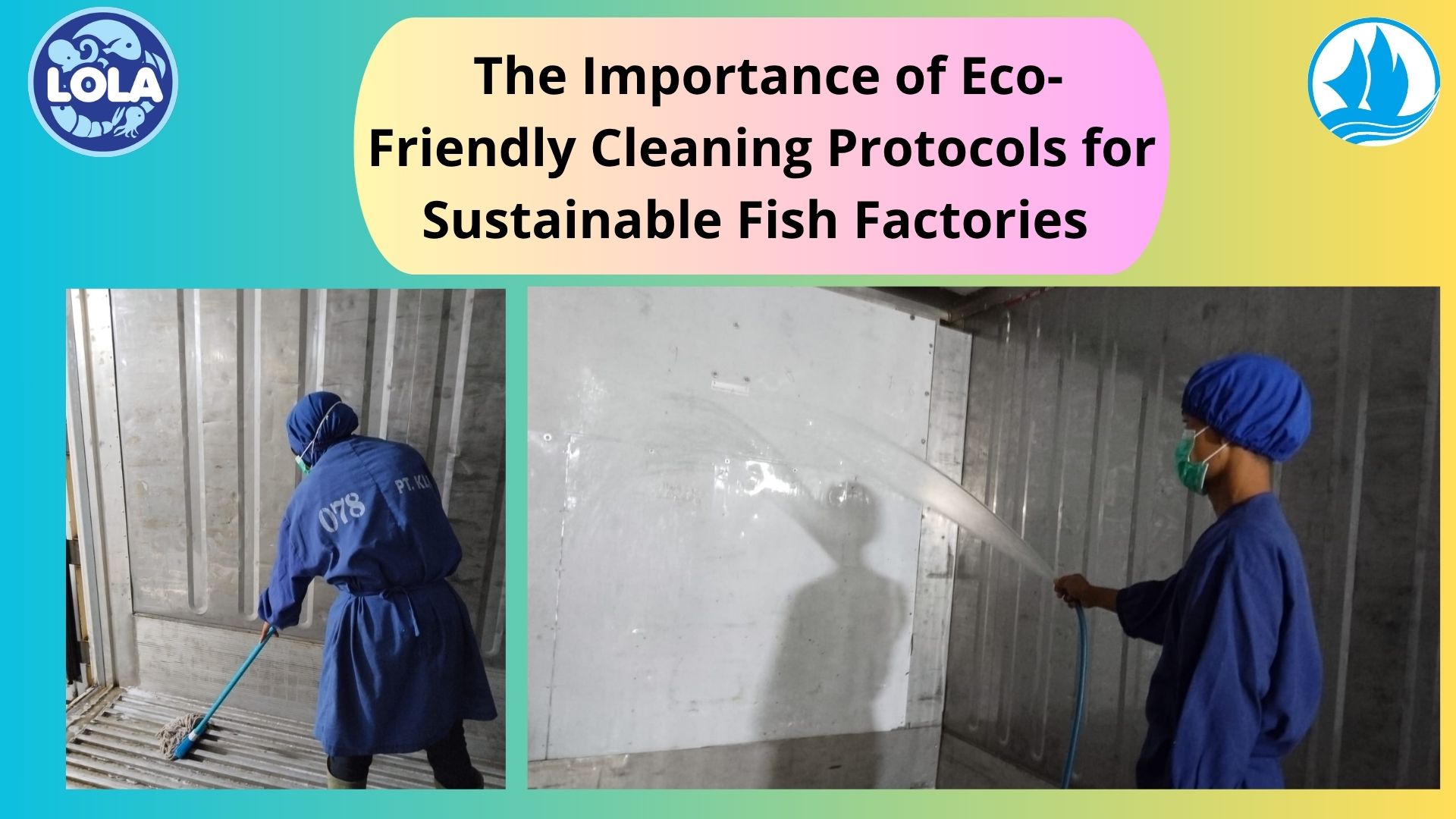
kelolalaut.com In the seafood processing sector, hygiene and sanitation are non-negotiable. Processing halls, filleting tables, conveyer belts, and cold storage units must undergo rigorous cleaning and disinfection daily to eliminate pathogens, prevent cross-contamination, and ensure food safety compliance. Historically, this level of cleanliness relied heavily on harsh chemical agents, excessive water usage, and thermal sanitation methods. Today, as global environmental standards tighten and consumer demand for sustainably produced seafood rises, fish factories are shifting toward eco-friendly cleaning protocols. Integrating green sanitation practices into daily operations is no longer just an environmental ideal—it is a vital operational strategy for long-term sustainability and commercial viability.
The Environmental Impact of Traditional Sanitation
Traditional cleaning routines in fish plants create severe environmental footprints, primarily affecting local marine and freshwater ecosystems.
- Effluent Toxicity and Chemical Load: Heavy use of chlorine, synthetic detergents, quaternary ammonium compounds (QACs), and caustic soda generates chemical-laden wastewater. When discharged into local water bodies, untreated or partially treated effluent alters pH levels, damages aquatic life, and contributes to chemical pollution.
- Excessive Water Consumption: Standard washdown procedures often rely on continuous high-pressure hot water streams. A typical medium-sized seafood plant can consume hundreds of thousands of liters of potable water daily just for sanitation.
- Eutrophication Risks: Organic waste combined with nitrogen- and phosphorus-rich cleaning agents released into rivers or coastal areas fuels algal blooms. These blooms deplete oxygen levels in the water, creating marine "dead zones."
Core Elements of Eco-Friendly Cleaning Protocols
Adopting eco-friendly protocols does not mean compromising hygiene standards; rather, it involves replacing chemical-heavy, wasteful practices with scientifically optimized green technologies and processes.
[ Traditional Cleaning ] ---> [ Sustainable Transition ] ---> [ Eco-Friendly Impact ]
• Chemical Detergents • Enzyme-Based Cleaners • Zero Chemical Residue
• Excessive Water Use • Microbubble / Dry Steam • 30% - 50% Water Savings
• Chlorine Disinfection • Ozonated Water Systems • Chemical-Free Sanitization
1. Enzyme-Based and Bio-Based Detergents
Instead of aggressive chemical solvents, eco-friendly protocols utilize enzymatic cleaners. Enzymes break down organic proteins, fats, and fish oils at a molecular level without relying on toxic chemicals. Bio-based surfactants derived from natural plants are biodegradable, non-corrosive, and safe for factory discharge.
2. Ozonated Water Technology
Ozone ($\text{O}_3$) dissolved in cold water serves as an extremely powerful, chemical-free disinfectant. Ozone neutralizes bacteria, viruses, and bio-films on contact up to 3,000 times faster than chlorine. Once the sanitation cycle ends, ozone naturally breaks back down into pure oxygen ($\text{O}_2$), leaving zero toxic residues on food-contact surfaces or in factory wastewater.
3. Dry Steam and Microbubble Cleaners
Utilizing low-moisture steam or microbubble water technology allows operators to clean deep crevices and conveyer belts with a fraction of the water volume used in conventional hose-downs. High-temperature steam kills surface pathogens instantaneously while reducing water consumption by up to 70%.
Key Benefits of Green Sanitation in Fish Factories
Transitioning to sustainable sanitation delivers multifaceted advantages across environmental, operational, and regulatory domains:
|
Area of Impact |
Eco-Friendly Strategy |
Practical Benefit |
|
Wastewater Management |
Biodegradable agents & Ozonated water |
Reduces chemical oxygen demand (COD) and biochemical oxygen demand (BOD) in factory runoff |
|
Operational Costs |
Low-moisture steam & cold ozone cleaning |
Decreases water utility bills and thermal energy costs for heating water |
|
Equipment Longevity |
Non-corrosive bio-detergents |
Extends the operational lifespan of stainless steel machinery and conveyor systems |
|
Worker Safety |
Elimination of harsh chemical fumes |
Reduces respiratory hazards and chemical skin burns among cleaning staff |
Enhancing Marketability and Compliance
Beyond environmental stewardship, eco-friendly cleaning protocols play a direct role in corporate profitability. Leading international seafood buyers and retail chains increasingly require suppliers to demonstrate sustainable manufacturing practices.
Certifications such as the Marine Stewardship Council (MSC), Aquaculture Stewardship Council (ASC), and ISO 14001 (Environmental Management) award points for sustainable waste management and eco-conscious sanitation routines. Factories that adopt verified green protocols build stronger brand reputations, gain entry into premium eco-labeled retail markets, and protect themselves against tightening environmental discharge penalties.
If youre interested in our Baby Octopus Flower, Baby Octopus Whole Cleaned, Baby Octopus Whole Round, Barramundi Fillet Portion Cut, Barramundi Fillet Skin On, Barramundi Fillet Skin On. Barramundi Fillet Skinless, Barramundi Whole Round / Whole Gilled Gutted Scaled,Black Pomfret Portion Cut, Bonito Fillet Loin,Bonito Fillet Portion Cut,Bonito Whole Round,Catfish Fillet Skinless,Catfish Steak,Catfish Whole Round / Whole Gilled Gutted,Cobia Fillet Skin On,Cobia Fillet Skinless,Cobia Whole Round / Whole Gilled Gutted,Coral Trout Fillet Skinless,Coral Trout Fillet Skinless,Coral Trout Whole Round,Corvina / Croaker / Jew Fish Whole Round / Whole Gilled Gutted Scaled,Corvina / Croaker / Jewfish Fillet Skin On,Corvina Fillet Skin Patch,Whiting Fish Whole Round,Parrotfish Fillet Skinless,Red / Scarlet Snapper Fillet Portion,Red / Scarlet Snapper Fillet Skin On,Red / Scarlet Snapper Indonesian Seaperch Whole Round / Whole Gilled Gutted Scaled,Red / Scarlet Snapper Saddle Tailed Seaperch Whole Round / Whole Gilled Gutted Scaled,Shark Belly,Shark Cartilage,Shark Fillet,Shark Flake,Snapper / Red Bass Whole Round / Whole Gilled Gutted Scaled,Snapper Fillet Skinless,Snapper Mangrove Jack Whole Round / Whole Gilled Gutted Scaled,Spanish Mackerel Cutlet / Kingfish Steak,Squid Flower Cut,Squid Ring, Squid Skewer,Squid Tube,Squid Whole Cleaned,Squid Whole Round,Sweetlips Fillet Skin On,Sweetlips Fillet Skinless,Sweetlips Whole Round / Whole Gilled Gutted Scaled,White Snapper / Robinson Sea Bream Fillet Skin On,White Snapper / Robinson Seabream / Seabream Whole Round / Whole Gilled Gutted Scaled,Cuttlefish Fillet.Cuttlefish Pineapple Cut,Cuttlefish Whole Cleaned,Cuttlefish Whole Round,Emperor Fillet Skin On,Emperor Fillet Skinless,Emperor Grass Whole Round / Whole Gilled Gutted Scaled,Emperor Red Spot Whole Round / Whole Gilled Gutted Scaled,Emperor Whole Round / Whole Gilled Gutted Scaled,Giant Trevalley Fillet Skin On,Giant Trevalley Whole Round,Goldband / Crimson Snapper Fillet Portion Cut,Goldband / Crimson Snapper Fillet Skin On,Goldband / Crimson Snapper Whole Round / Whole Gilled Gutted Scaled,Grouper Black Dotted Whole Round,Grouper Fillet Portion Cut,Grouper Fillet Skinless,Gummy Shark Fillet,Halibut Fillet Skinless.Indian Mackerel Whole Round / Whole Gilled Gutted,Itoyori / Golden Threadfin Fillet Butterfly,Mahi-Mahi Fillet Skinless,Octopus Leg,Parrotfish Fillet Skin On please do not hesitate to contact us through email and/or Whatsappp
.jpg)
.jpg)
.jpg)
